

Marching into the new year with debts may prove stressful. In one scenario, you must be busy drafting lifestyle goals; on the other side, credit card bills await your attention. It is okay to find yourself on the fence regarding finances.
However, the situation does not always remain the same. You can regain control over finances by taking certain actions. The blog lists certain aspects that may help you.
Aspects that may help re-track finances
Rising living costs, higher interest rates and economic uncertainty left many households with stretched finances. While the external factors may be out of your control, how you manage money is not. Taking proactive steps now may help you improve financial resilience. Here are some:
Get clarity on Money
You cannot control what you do not measure. A clear and accurate view of your income, outgoings, debts, and savings is the foundation of major decisions.
According to ONS, households spend the largest portion of their income on housing, food and transport. Moreover, research continuously shows that people who actively track spending may reduce unnecessary costs, especially within the first three months.
What can you do?
List all sources of income and every monthly expense. Try to separate essentials from non-essentials. You can also use a budgeting app, spreadsheet, or open-banking tool to ensure accuracy.
Alternatively, you can consider instalment loans for a bad credit score. It may help you finance big-ticket purchases without paying up front. It allows you to pay a fixed monthly payment on the due date. Thus, it eliminates any surprises and allows you to budget well. Eventually, it improves your credit score, too.
Try to build a sustainable budget
A budget must reflect your convenience and savings goals. Each budget may differ according to the person’s income, monthly liabilities, and lifestyle. Regardless of that, one must prioritise essentials over discretionary expenses.
Also, make some space for emergency expenses. According to Money and Pension Service reports, “the households within certain budgets are more likely to feel in control of their finances.” Moreover, inflation has variably affected expenses like food and energy.
Identifying your essential and discretionary expenses, such as food and energy, makes a flexible budget essential.
- Try to tackle high-interest debt rightly
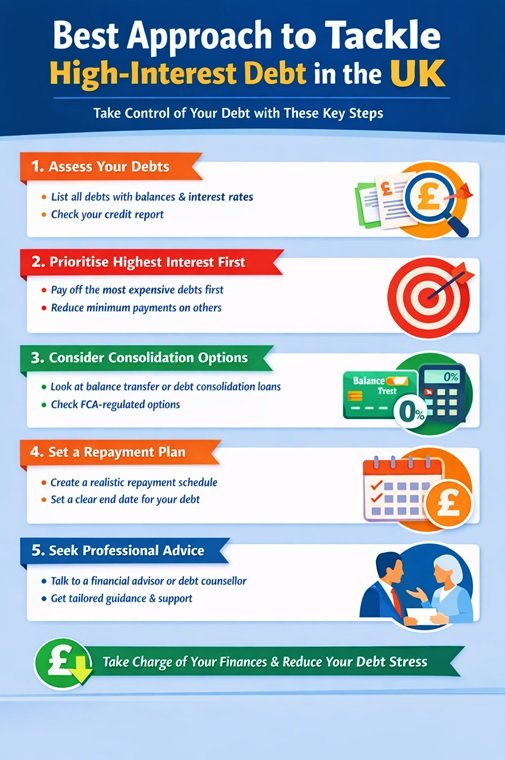
High-interest debt is one of the biggest obstacles to financial success. Moreover, aspects like credit cards, overdrafts, and buy now pay later schemes may erode the basic disposable income.
You may not know this, but credit card interest rates may exceed 20% APR in comparison to just 7.8% on personal loans. Persistent credit card debt poses a major risk to households in the UK, according to the FCA.
What can you do?
You can identify and prioritise paying the high-interest debt first. You can also consolidate debts using 12-month loans for a bad credit score. It may help you bring the overall dues down and save money on interest costs. The loan helps you spread the payments over time or pay the dues in small monthly payments. It may be a long agreement, but it stabilises finances gradually.
Build an emergency fund
You may not feel the need to have an emergency fund. However, it is the thing that you should have the space for in your budget. According to the MoneyAdvice portal, one must have 3-6 months of essential expenses in an emergency fund.
Therefore, saving even just £50 every month into your emergency fund may help build savings. You cannot withdraw it before 6 months, as there are limits to that. Otherwise, you may incur a penalty and lose the return on investment percentage. You can set direct debits for regular savings from your account. It may help you build a good portion without worries.
What can you do?
- Identify how much you usually need for emergencies. Analyse by checking the previous months’ needs.
- Analyse your monthly expenses and save a portion of them towards emergencies. It must not affect your finances.
Get professional guidance
You must not hesitate to receive guidance from experts. It is especially true if you struggle to analyse and make the right decisions for your finances. The experts may analyse your personal situation, finances, lifestyle and savings goals.
Accordingly, they may suggest the best strategies which may help you take control of your debt. Moreover, individuals receiving financial advice are likely to avoid small issues from escalating into bigger issues.
What should you do?
Explore and contact the best financial advisor who shares expertise in the specific problem you face. For example, if you need help with budgeting, check for similar expertise. Here is an example which may help you understand it better.
Client profile
A 38-year-old professional in the UK with a stable income, a mortgage, and multiple unsecured debts was struggling to save and felt constant financial pressure despite earning well.
The challenge
High-interest credit cards, inconsistent budgeting, and rising household costs meant cash flow was tight and financial confidence was low.
Ideal approach
A regulated financial expert carried out a full review of income, outgoings, debts, and existing benefits. A clear cashflow plan was created, high-interest debt was restructured, and workplace pension and protection arrangements were reviewed in line with UK regulations.
The result
- Monthly outgoings reduced by over £300
- High-interest debt is placed on a structured repayment plan
- An emergency fund established in an FSCS-protected account
- Greater clarity, confidence, and financial control within months
Also, one may consider doorstep loans for bad credit scores. It may be more ideal than a credit card or overdraft to fund instant cash needs at home. Analyse the cash requirement, and you may get it instantly even if you lack a bank account.
The outcome
The client moved from financial stress to stability, with a clear plan for managing money today and building long-term security.
Bottom line
These are some of the best ways to take control of your finances well. Identify your finances and analyse what you can do to better manage your finances. The first step is to know your debts, next, analyse your budget and redo, save for emergencies and pay debts. If required, you may also consider an expert’s guidance for a better view.